
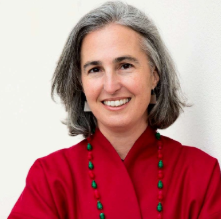
Javiera Barandiarán is Associate Professor in Global Studies at the University of California, Santa Barbara, and director of the CREW Center for Restorative Environmental Work. Her work explores the intersection of science, environment, and development in Latin America. She recently published Living Minerals: Nature, Trade and Power in the Race for Lithium, with MIT Press. Barandiarán received a Berlin Prize from the American Academy in Berlin and was an invited fellow at the Rockefeller Foundation’s Bellagio Center for this work. She has also published widely in English and Spanish on environmental conflicts, fossil fuel decommissioning, scientific development, Rights of Nature, and constitutional change.
Consumers today are buying electric vehicles with lithium-ion batteries motivated by the belief that they are doing good and decarbonizing society. But is sustainable lithium extraction possible? In Living Minerals, Javiera Barandiarán examines the history of lithium mining and uses during the 20th century, with a specific focus on the two oldest brine-lithium mines: Silver Peak, Nevada and Salar de Atacama, Chile, where lithium is found as one more element in a liquid mix of salts, minerals, and organisms.
For six decades, mining experts have failed to ask about water usage, about waste or brine leakage, and about the ecosystem impacts in delicate deserts. Instead, they have relied on various fictions about the size of reserves, the fate of leaked brine, or the value of waste in facilitating mine development. These fictions, rooted in brine-lithium's material qualities, could be sustained thanks to powerful mining memories that celebrated resource nationalism. Using historical research on mining, applying a Rights of Nature paradigm, and drawing on new archival materials from Chile and the U.S., the book argues that decarbonizing society requires that we reckon with these realities— or risk deepening our dependency on an unsustainable mining industry.