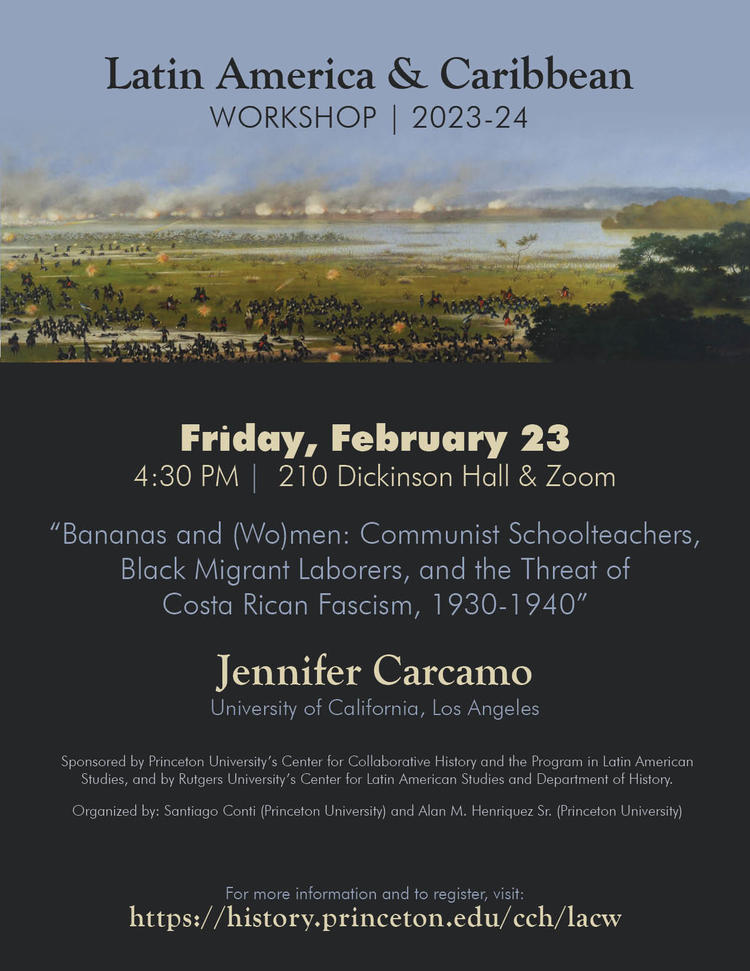
Inspired by Roque Dalton’s Las Historias Prohibidas del Pulgarcito, this paper uncovers the radical history of El Salvador’s communist organizers from 1930-1960. I focus on the role of communists specifically given that the “fight against communism” is how the Salvadoran military government justified the systematic ethnocide of El Salvador’s indigenous population, as well as why they enabled and welcomed direct U.S. intervention shortly thereafter. Ultimately, I argue that Salvadoran communists began to organize as a direct response to a growing wave of early twentieth-century fascism in Central America, which reached a pivotal peak in El Salvador in 1932 under the administration of Maximiliano Hernandez Martinez. However, contrary to popular discourse which suggests that Salvadoran communists seized organizing abruptly after 1932 and did not visibly resurge until the 1970s and 1980s, I demonstrate that Salvadoran communists also organized outside of El Salvador, including in neighboring Guatemala, Costa Rica, Honduras, and Nicaragua, as well as in solidarity with the Communist Party of Mexico (PCM) and Cuba (PCC), prior to and after 1932. It was this spirit and practice of transnational organizing and international solidarity that enabled Salvadoran communists to not only survive, but to essentially defy and evade attempts at their own permanent erasure. Moreover, it is how they were able to clandestinely continue organizing and supporting the revolutionary struggle in El Salvador, which began to regain momentum in 1944—the same year as Guatemala’s October Revolution. This is part of the “historia prohibida” of Salvadoran communists prior to the 1980s revolutionary war.
Speaker Bio:
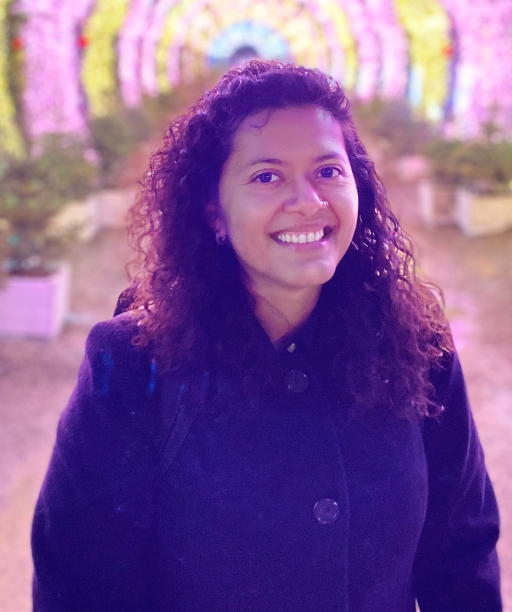
Jennifer Carcamo, a PhD candidate focusing on modern Central American history at UCLA, Los Angeles. While her previous research looks at the history of student movements in El Salvador and forced migration from Central America, her current doctoral research focuses on the origins and evolution of communist parties and socialist movements in Central America from 1920-1960. She is particularly interested in the ways these parties and movements frontally opposed fascism through transnational organizing efforts that centered on international solidarity as well as actively involved women and afro indigenous communities.
This workshop will be held hybrid (in-person and Zoom). REGISTRATION is only required for those who attend via Zoom.
SPONSOR: Princeton University’s Center for Collaborative History and the Program in Latin American Studies, and by Rutgers University’s Center for Latin American Studies and Department of History.