
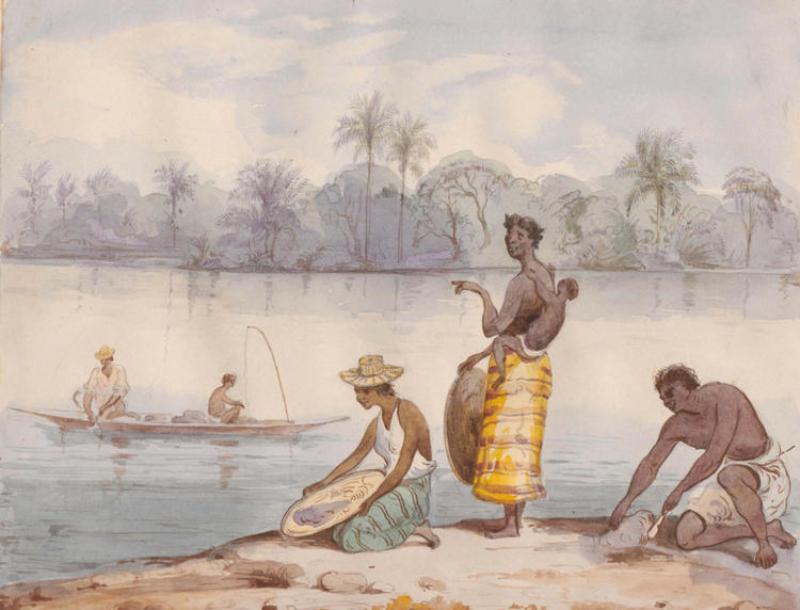
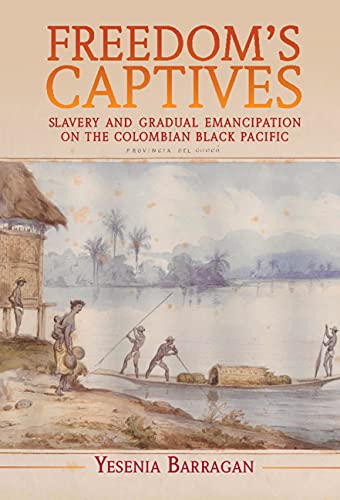
Rutgers Assistant Professor of History, Yesenia Barragan, will be giving a book talk on her book, Freedom's Captives: Slavery and Gradual Emancipation on the Colombian Black Pacific, which is a narrative-driven, social, political, and geographical study of the gradual abolition of chattel slavery in the majority-Black Colombian Pacific, the gold mining center of the former Spanish Empire.
In her book, she calls the thirty-one years—from the gradual abolition law’s enactment in 1821 to its destruction in 1852 with the final abolition of slavery—the time of “gradual emancipation rule” in the northern Andes. From the autonomous rainforests and gold mines of the Colombian Pacific, Freedom’s Captives rethinks the nineteenth century project of emancipation in Colombia and the Americas. She argues that although gradual emancipation rule was ostensibly designed to destroy slavery, paradoxically, speculating slaveholders in Colombia came to have an even greater stake in slavery. Gradual emancipation rule expanded opportunities for diverse stakeholders to partake in the owning and exploitation of young Black people at cheaper prices and established new political rituals that reinforced the disciplining logic of the slaveholding order. Using narrative and storytelling to map the worlds of Free Womb children, enslaved women miners, free Black boatmen, and white abolitionists in the Andean highlands, Freedom’s Captives reveals how the Atlantic World processes of gradual emancipation and post-slavery rule unfolded in the Colombian Black Pacific.
This event will be held at Brown University's Joukowsky Forum, Watson Institute, 111 Thayer Street