
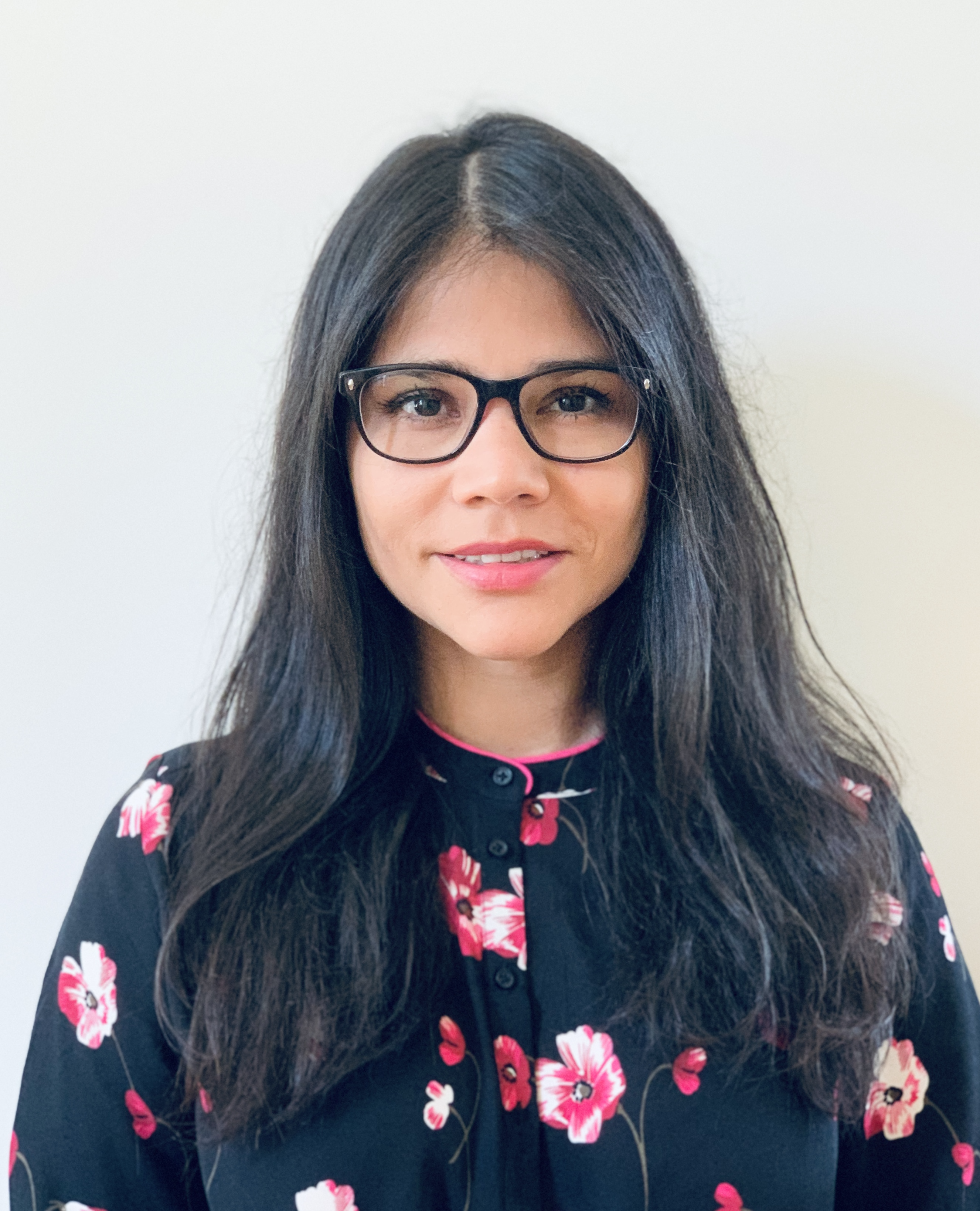
Dr. Evelyn Saavedra Autry received her Ph.D. in Latin American Studies and a Graduate Certificate in Women’s Studies from the University of Georgia. Her research creates a conversation between various fields of knowledge, particularly Indigenous epistemologies, and pedagogies, literature, cultural studies on (de)coloniality, and gender studies, through the analysis of Andean women’s identity formations. In her current book project, Race, Gender, and Memory in Narratives of the Andes, Dr. Saavedra Autry constructs a genealogy of gender-based violence that offers an in-depth examination of the colonial mechanisms behind the objectification of Indigenous women. Over the last ten years, Dr. Saavedra Autry has gained significant experience teaching graduate and undergraduate courses. At Rutgers, she has developed and taught graduate and undergraduate seminars on contemporary feminist theory, decolonial and Indigenous feminism, and social justice movements. Recently, Dr. Autry transitioned from post-doctoral associate to assistant professor in the Department of Women's, Gender, and Sexuality Studies.
Read on to get to know Evelyn Autry a little better, and to get a deeper insight into her research interests, academic goals, and more.
Can you tell us a little bit about your background & current projects?
I am an assistant professor at the Department of Women’s, Gender, and Sexuality Studies. Prior to this position, I was an Emerging Voices Fellow with the American Council of Learned Societies and held the position of Presidential Postdoctoral Fellow in Race, Racism, and Inequality at Rutgers. I received my Ph.D. in Latin American Studies and a Graduate Certificate in Women’s Studies from the University of Georgia. I am currently working on my first book titled Race, Gender, and Violence in Narratives of the Andes: Archives of Coloniality and Resurgence. I show that in order to understand present-day racism and gender-based discrimination and the colonial/modern processes that produced them, we must look at specific fragments of historical narratives from the colonial period to the present that speak not only about the dehumanization of Andean Indigenous women but also their resurgence in contemporary Peru.
In relation to research, my article “Insurgent Memories of War: Self-representation by Female ex-Combatants in Peru” will be published by Meridians Journal in the Spring 25 issue. My publication “Singing Feminist Ch’ixi+Art Music from las Rajaduras: Renata Flores, Isqun, and the Fractured Locus” was awarded the 2023 National Women's Studies Association Paper Award. I have published “Construcción de identidades femeninas andinas” in The Journal of Latin American and Caribbean Studies. My article “Testimonio, ficción y las batallas por las memorias en Insensatez” appeared in Vernacular. It is worth noting that I have also published works on colonial studies and the Latin American Avant-garde. “Mitos fundacionales en los Comentarios Reales de los Incas” was published by Caracoles and “Magda Portal: procesos de modernización, vanguardismo y compromiso” was published by Entre Caníbales and listed as an essential work in the volume Magda Portal: Bibliografía Esencial.
What was your transition like from post-doctoral associate to assistant professor? How will this be a different experience for you?
The transition from post-doctoral associate to assistant professor has been smooth. My department is incredibly supportive of my growth as a scholar, educator, and community member. This supportive environment enables me to manage my research, teaching, and service responsibilities while providing opportunities to engage in broader research scholarship. For example, I am a 2024-2025 Seminar Fellow at the Institute for Research on Women, where I will present my current research project, “Transit Memories as Haunting: Andean Indigenous Women’s Led Activism and Protest in the Peruvian Diaspora.” One significant change from postdoc to assistant professor will be my increased teaching load. During my postdoctoral fellowship, I taught one course annually. Now, I teach two courses each semester, which I find fulfilling as it allows me to stay updated on the latest trends in women’s, gender, and sexuality studies. This transition from post-doctoral associate to assistant professor is thrilling as it pushes me to balance research, teaching, and service in a manner that aligns with my identity as a scholar and educator.
That's wonderful to hear! What are you most looking forward to regarding your new position?
I hope to continue research on a new project tentatively titled “Indigenous Futurity, Feminism, and Embodied Genealogies in Latin America.” This project will address recent works from Indigenous feminist collectives such as Chola Contravisual, Mujeres Creando, Wiñay Wara, and non-gender conforming Indigenous peoples to examine how they use decolonial and transnational frames to challenge, question, and undo coloniality/modernity. I am also looking forward to working with students who focused on decoloniality and decolonial feminism, as well as to seeing my Honors students present their theses in Spring 2025. Finally, I hope to get more students excited to learn about Indigenous feminism and how Indigenous women have long been at the forefront of activism, playing crucial roles in movements that address issues of land rights, environmental justice, and gender inequality.
What courses will you be teaching? Any courses/subjects you’d like to teach in the future?
At Rutgers, I have developed and taught classes about feminist theory, decolonial thought, social justice movements, and advocacy. This fall, I'm teaching 01:988:202-Gender, Culture, and Representation. It's exciting to witness how students relate the course materials to their individual research interests and personal backgrounds. The class is enjoyable. Additionally, I'm directing the Honors Thesis Seminar, where WGSS students are developing their own research projects. This seminar stands out as one of my favorites in recent years. The students are exceptional. During spring, I will continue to direct the thesis seminar and teach the graduate course Feminist Advocacy: Tactics and Techniques. Drawing examples from decolonial and Indigenous feminist theory and praxis, the class will prepare students for the demands of social change activism and advocacy and assist them in cultivating the skills needed for learning theory from praxis. Some of the courses I hope to develop in the future are Feminist Genealogies: Decolonial and Indigenous Feminisms; Indigenous Women, Art, and Resistance; Images of Indigenous Women from Abya Yala to Turtle Island in Literature, Popular Art, and Film; and Human Rights Histories in 21st Indigenous Latin America.
What do you want to accomplish during your time as assistant professor?
As an assistant professor, I want to achieve several goals that reflect my passion for teaching, research, and service. I aim to continue building my research profile by developing innovative projects that contribute to the fields of Latin American studies and Gender studies, with a focus on decolonial and Indigenous feminism. I plan to apply for grants, publish in academic journals, and present at conferences. I am eager to keep supporting students in their academic journeys by mentoring them on research projects and helping graduate students refine their theses or dissertations. Finally, I aim to contribute to departmental initiatives, collaborate with colleagues across departments, and support university initiatives that combat hate and pursue diversity, equity, and inclusion.
Sincere thanks to Evelyn Autry for participating in this interview. The CLAS community extends a heartfelt congratulations on this new position and we look forward to reading her work in the future. Dr. Autry can be reached at