

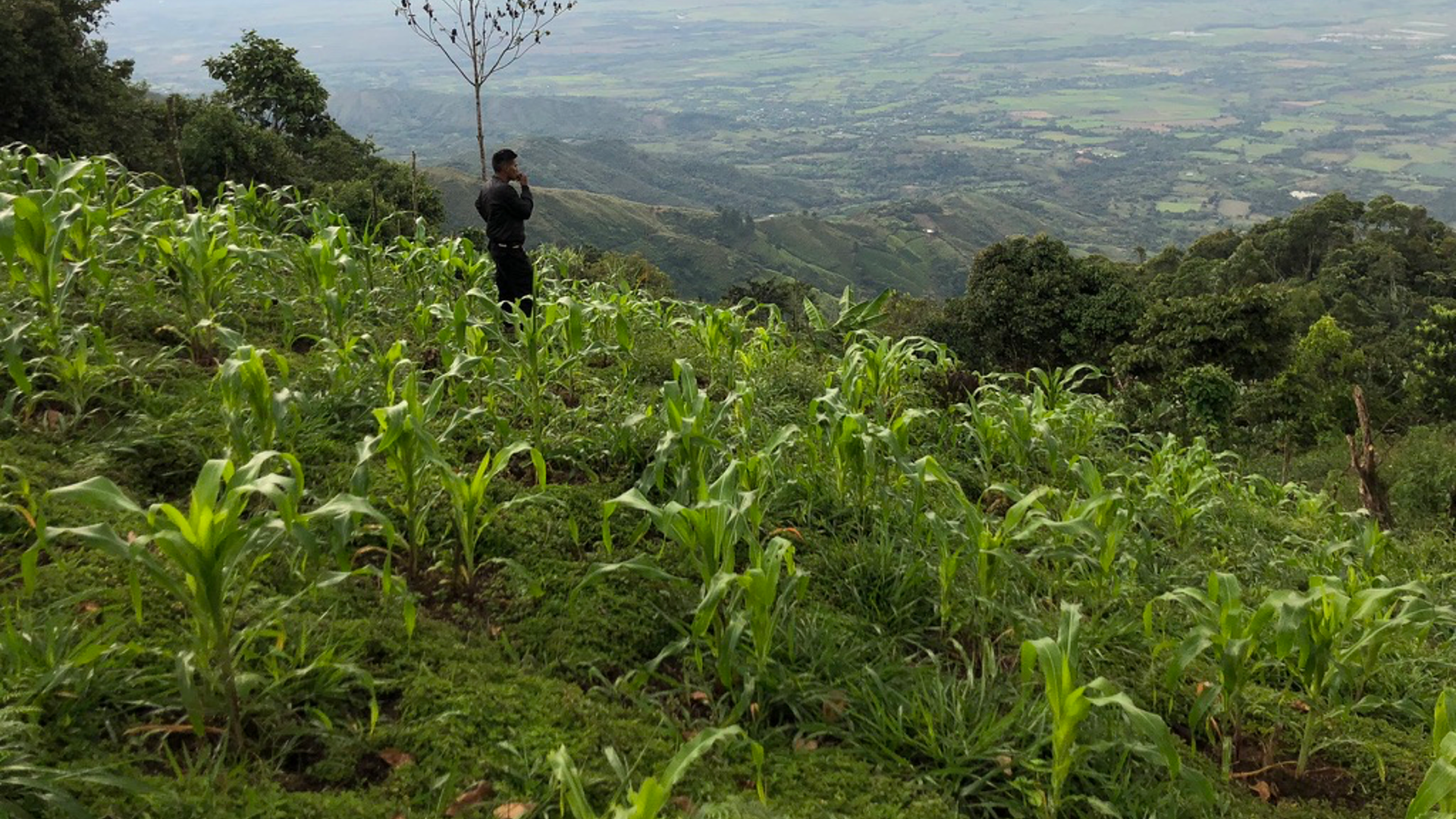
Alex Liebman recently defended their dissertation in Geography, working with Drs. Kevon Rhiney (committee chair), Andrea Marston, Jamaal Wright (University of Florida), and Anthony Dest (Lehman College - CUNY). The dissertation, titled Cannabis, cane, and campesinxs: Identification, resistance, and negotiation at the plantation interface in northern Cauca, Colombia, traces how mestizx campesinxs living in the Andean foothills directly overlooking a sugarcane-dominated plantation valley (re)possess territory by reconfiguring spatial relations of ecology, labor, capital, and intersecting politics of difference. Using social science tools such as participant observation and oral history interviews with women, youth, and movement elders, Alex critically sketches campesinxs’ (peasants) negotiations of plantation capital, and colonial racial-capitalism’s logics of accumulation more broadly.
Through insights into the gendered social reproduction of campesinx daily life as contestations and negotiations over plantation hegemony, the dissertation argues for the enduring relevance of agrarian questions of land, survival, and surplus as dynamic sites to understand and shift not solely rural relationships but the place of the countryside and agriculture within capitalism as a whole, in order to transcend colonial-racial capitalist relations overall. Questioning the plantation through the lens of agrarian social reproduction demonstrates how sugar’s racialized uneven development produces precarity, informalization, and stigmatization across its (supposed) outsides, contributing to debates in feminist political economy and Latin American studies around (post)development politics, plantations, illicit crops, and agrarian futures.
Alex will be working on transforming the dissertation into a book manuscript and is currently finishing a collaborative edited book with Colombian colleagues (Axel Rojas, Universidad del Cauca, Daniel Campo Palacios, independent researcher) regarding the legacy of Michael Taussig and Anna Rubbo's Esclavitud y Libertad en el Valle del Rio Cauca (1975) in the region. Alex is also in the midst of developing collaborative work with Jamie Gagliano (Geography, Rutgers) that examines points of interconnection between studies of agrarian change and trans/queer theories of materiality and difference.
Future research directions will likely delve back into Colombian agrarian contexts with an expanded focus on rural queerness, sonic geographies, and elite power, as well as new projects regarding the political economy and queer space-making of DIY parties and political ecological transformations of marijuana, toxic waste, and solar power in the rural U.S. Northeast.