
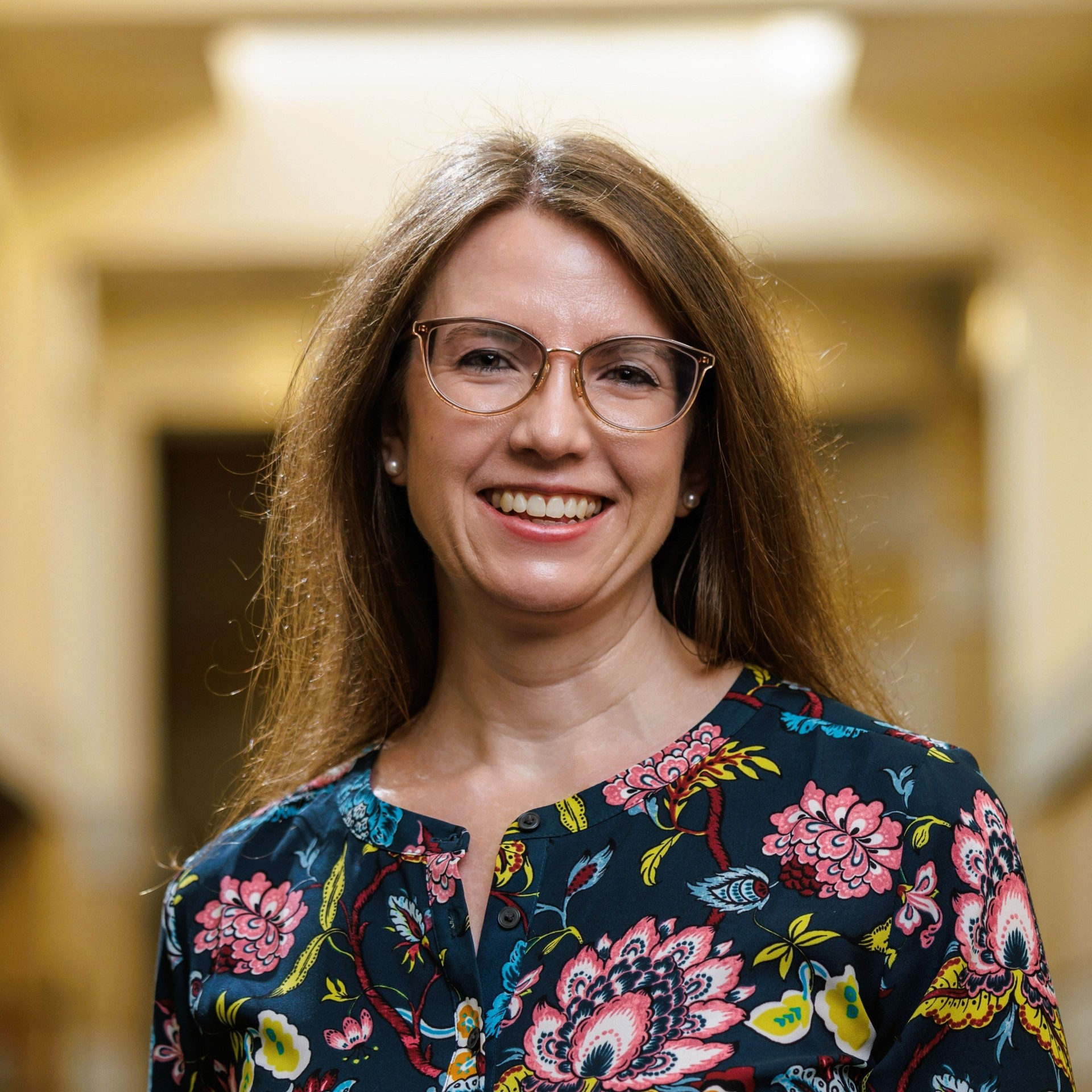
We are delighted to welcome Professor Jana Morgan to Rutgers! Having recently joined the Department of Political Science, she is now part of the vibrant community at the Center for Latin American Studies (CLAS). In this brief introduction, we share a glimpse into her academic background, her trajectory, and her current work at Rutgers. Welcome to Rutgers and to the CLAS community!
Can you tell us a bit about your background and what brought you to this point in your academic journey?
I am thrilled to be joining Rutgers! Prior to making the move to New Jersey, I was on the faculty at the University of Tennessee-Knoxville for 20 years. I arrived at UTK as an assistant professor in 2005 after earning my PhD in Political Science at the University of North Carolina at Chapel Hill. During my time at UTK, I progressed through the ranks in the Political Science department, and I led our interdisciplinary program in Latin American and Caribbean Studies during a 5-year term as Chair. I have also been active in interdisciplinary professional spaces, and I just completed six years as Associate Editor for Politics and International Relations at Latin American Research Review, the flagship journal of the Latin American Studies Association. I have also held visiting fellowships at the Russell Sage Foundation in NYC, the Kellogg Institution for International Studies at Notre Dame, and the Wilson Center in Washington, DC. Although I had many wonderful colleagues at the University of Tennessee, Rutgers offered an amazing opportunity to connect with an academic community that is committed to understanding the substantive problems of politics in ways that resonate with me and that sincerely values a variety of scholarly approaches and perspectives. I am also excited about the various centers and programs at Rutgers that bridge across disciplinary divides, and I am particularly looking forward to connecting with the CLAS community.
What drew you to the study of Latin America in your research and teaching?
I have had a longstanding interest in Latin America that has origins in time my parents spent as teachers in Peru. Their stories about living on the edge of the Amazon were certainly outlandish and probably poorly grounded in the realities Peruvian life, but they haunted my childhood and sowed in me a desire to better understand those realities, then and now. As a result, I studied Spanish as a kid and then Latin American literature in college, and I spent time abroad in Mexico City and Quito during my undergrad years. Those experiences living and working in Latin America further solidified my interest in the region and especially its politics. I continue to be drawn to the rich intellectual traditions, the innovative thinking, and the creative strategies for thriving that I routinely encounter in my work in and about the region, and I remain convinced that political science (and probably other steams of thinking as well) has so much to learn so much from Latin American experiences.
You’ll be teaching Change in Latin America this year—what are some of the big questions or themes you’re hoping to explore with students?
In my undergrad Change in Latin America course, we are primarily concerned with understanding the challenges to democracy in the region. We begin the course by talking about how early dynamics of state formation, nation-building, and economic and political development continue to shape politics in the region today, and then we turn to discussing contemporary power dynamics. The class is really built around understanding the impediments to meaningful democracy. And I find that many of the themes that we discuss – such as entrenched hierarchies, unequal representation, different forms of violence, the vulnerability of elections, and competitive authoritarianism – have relevance well-beyond Latin America.
How does your current research connect with contemporary issues or transformations in the region?
My current research (with Nate Kelly, Rutgers Political Science) is concerned with the ways that ethnoracial hierarchies pose a fundamental threat to democracy in the Americas. We argue that the persistent and pervasive nature of these hierarchies create tiers of citizens, which differentially allocate political rights and power to different groups. These racialized tiers of citizenship are at odds with the basic logic of democracy, which is premised on the idea that all people in a society have access to the same basic rights and liberties. This contradiction between the formal practice of democracy and entrenched ethnoracial hierarchies pose a challenge to democratic society. This contradiction weakens the legitimacy of democratic forms of governance not only among Indigenous and Afrodescendant Latin Americans who are directly harmed, but also among privileged group members whose “moral capacities” (quoting Juliet Hooker) are diminished by these hierarchies. We can see these patterns at work when privileged group members (i.e., whites and mestizos) are willing to abrogate the rights of minoritized group members and even reject election outcomes when they reflect the interests and priorities of these groups. This work helps show how persistent racialized hierarchies are a fundamental threat to democracy across the Americas and suggests that the establishment of meaningful and durable democracy will require dismantling hierarchies of this sort.
What do you find most exciting or urgent about studying Latin American politics today?
Wow – great question! Latin America helps us see some of the most urgent issues in contemporary politics across-the-board. The region exposes the vulnerabilities of democracy and helps us understand the risk of attempting to build democratic regimes without confronting structural inequalities. Though scholars have often used the US (or Europe) as a reference point to make sense of politics in the Global South, I would argue that the reverse is a much more fruitful path in our current times – understanding Latin American politics helps us understand power dynamics not only in Latin America but in our own context as well.