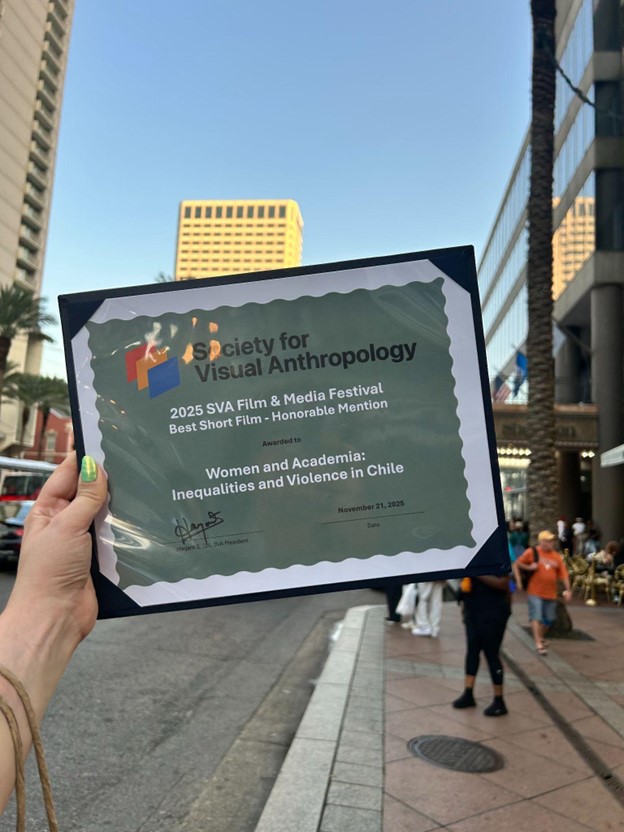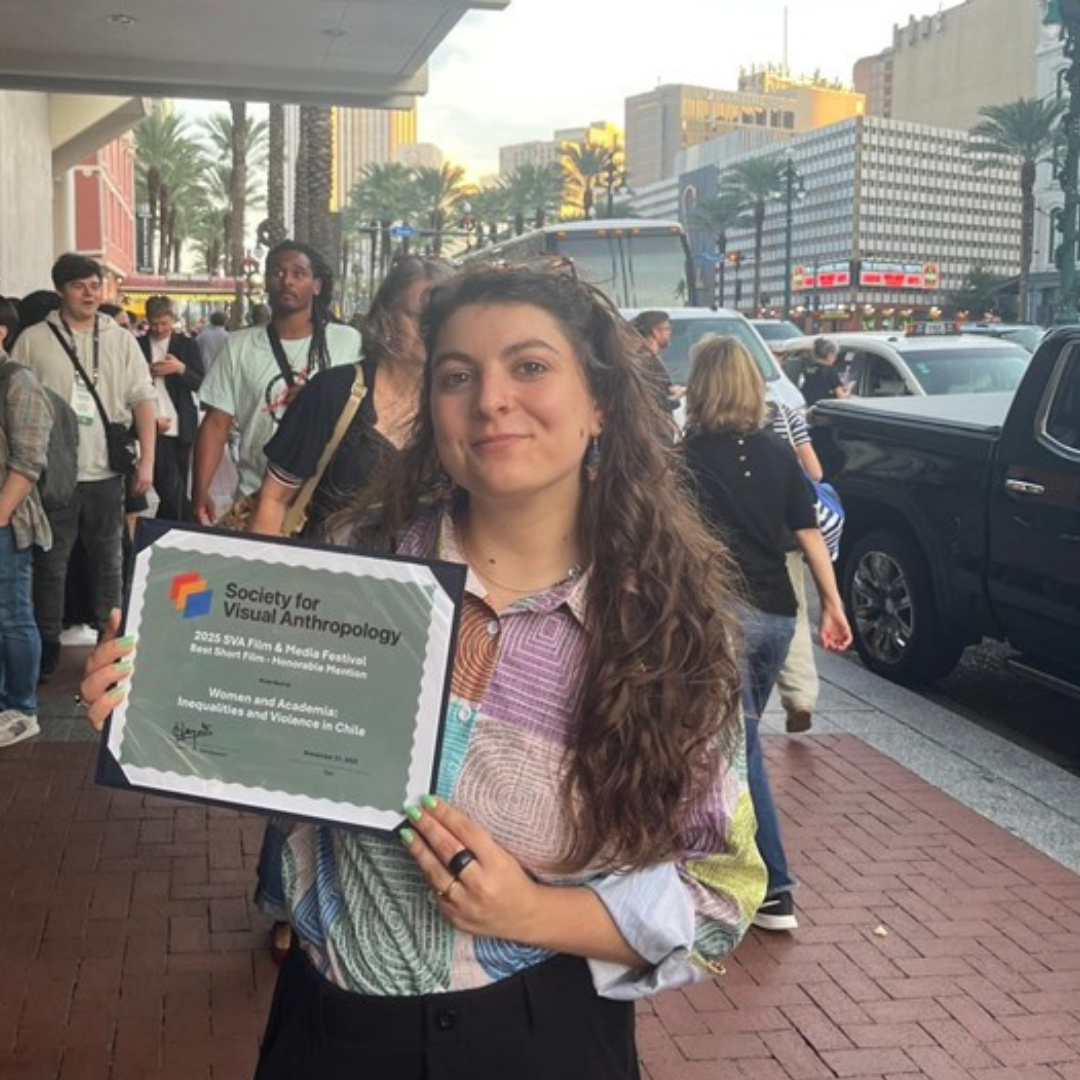
We are so happy to share the news that Gloria D'Alessio PhD student in Anthropology, won the Honorable Mention Award for her short film Women and Academia: Gender Violences and Inequalities in Chile. We talked to Gloria about her accomplishments, and here is what she shared with us:
Gloria, tell us more—what is the film about?
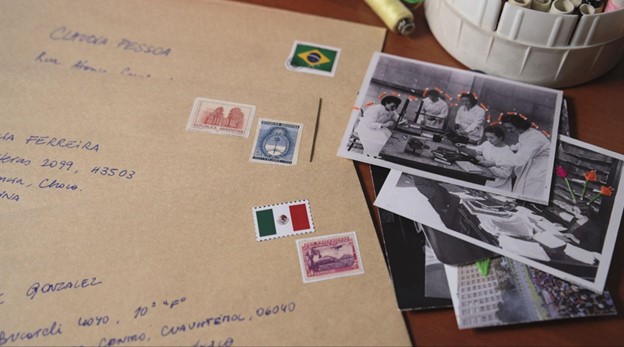
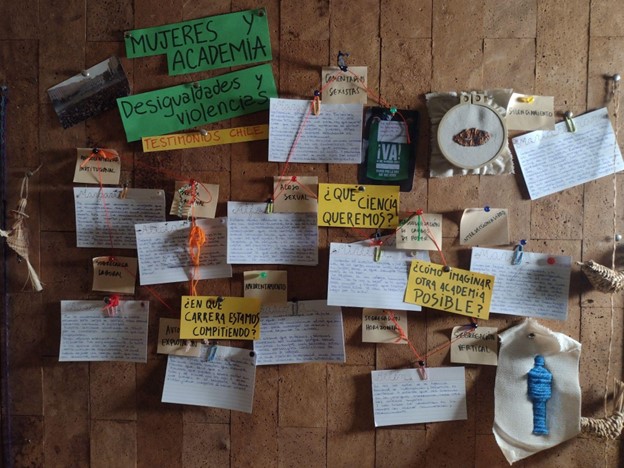
The film explores the ongoing gender inequalities that persist in Chilean academia, particularly within the social sciences. The first part follows a researcher who transforms her frustration into an invitation to several colleagues to conduct a comparative study across Chile, Argentina, Brazil, and Mexico. The second part brings forward the history of university and street activism in Chile, through a conversation between three different generations of women scholars. Finally, part three, “Breaking the Silence”, looks at testimonies from academics who experienced situations of violence, while the researcher analyzes and reflects on their stories.
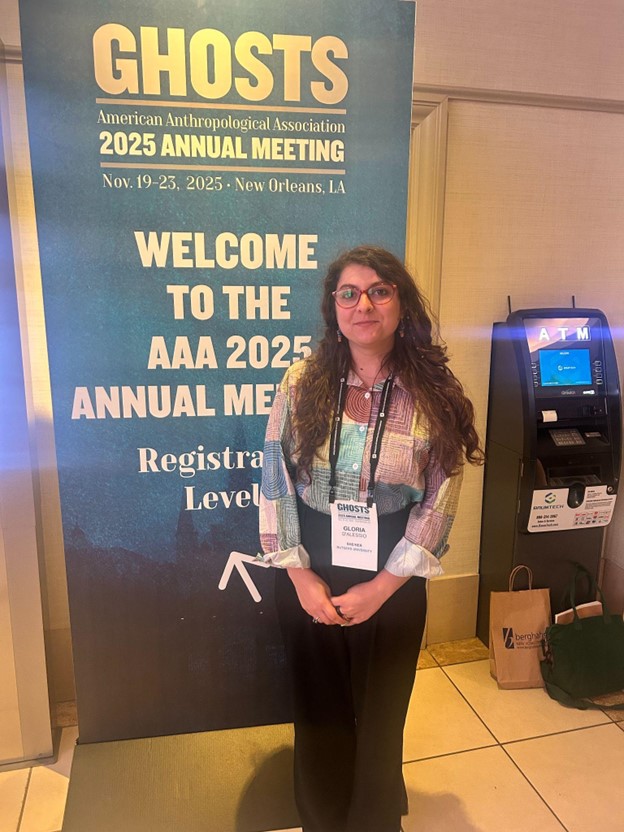
During the Annual Meeting of the American Anthropological Association (AAA) in New Orleans (November 18–23), the Society of Visual Anthropology Film Festival—directed by Mariam Abazeri and Anna Neumannonde—presented its official selections. The festival received more than 260 submissions, and Women and Academia was not only accepted but also received an Honorable Mention Award. It was an incredibly moving experience.
Where did the idea come from?
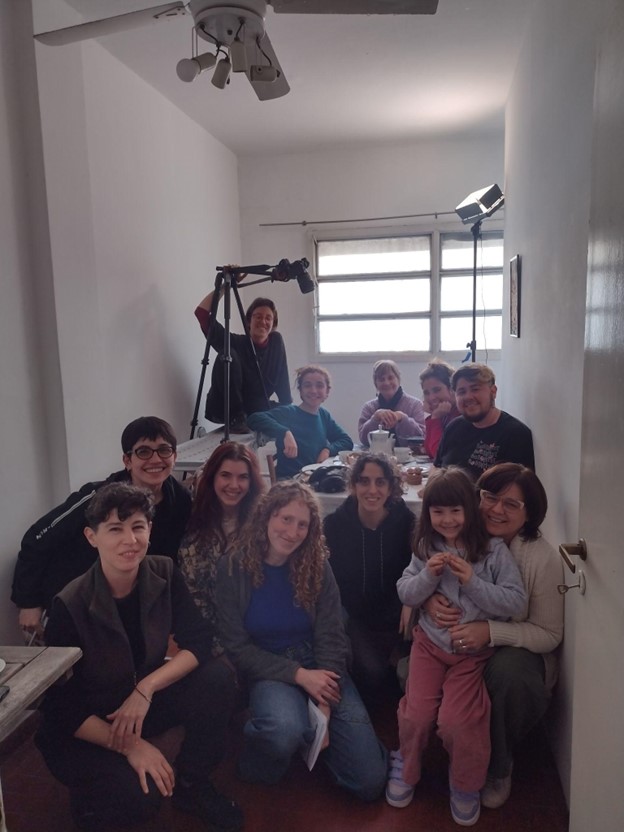
The short film is based on a research project titled Women and Academia, directed by Drs. Menara Lube Guizardi, Herminia González, and Carolina Stefoni, and carried out by a large team of young researchers and fellows. The project, funded by ANID (Chile), has already been published as a book in both English and Spanish. The team invited our collective, La Cocina de la Investigación, to develop proposals to share the project’s findings with broader audiences, using artistic languages that go beyond academic writing.
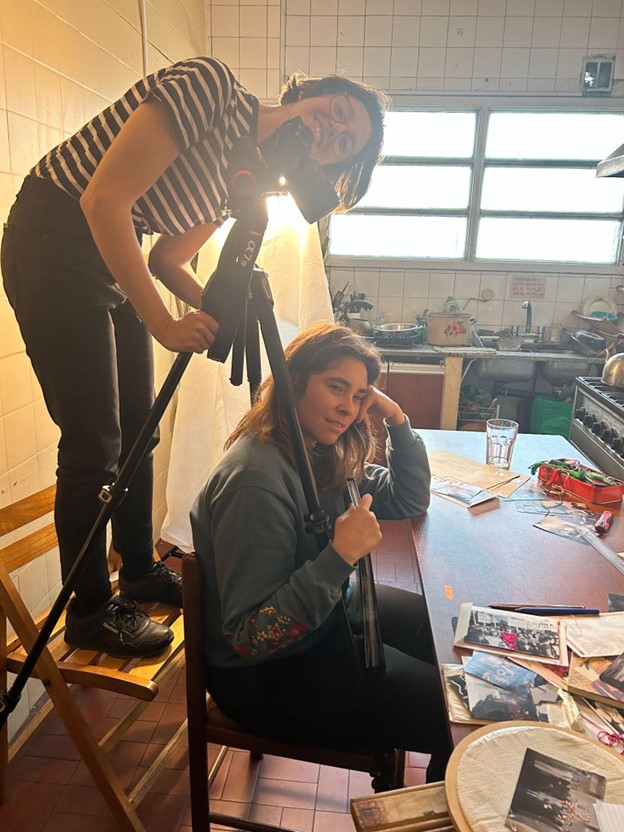
This began a nearly year-long process in which we studied the research, selected the core themes we wanted to bring into the film, and carried out a creative transposition process: writing a new script inspired by the original study but transformed for cinema. In September 2024 we filmed in Buenos Aires, and after post-production, we published all the videos on YouTube.
Who is part of the project?
La Cocina de la Investigación is a feminist working collective founded in 2020. We collaborate across social research and artistic disciplines such as film, photography, and web design. The collective includes Sofía Bensadon, Victoria Sanguineti, Florencia Valese, Paula Man (UNSAM/Argentina), Rocío Deza (Hospital Italiano/Argentina), Miranda Hochman (Humboldt University of Berlin), and Gloria D’Alessio (Rutgers University).
What were some of the challenges?
One of the biggest challenges was translating a rigorous research book into short videos of under ten minutes. Selecting what to include requires a lot of care and sensitivity. It is also challenging to find the right visual and narrative language. In this short film, we chose to work with the textile universe of threads, embroidery, and arpilleras, an artistic form of protest that emerged during the last civic-military dictatorship in Chile.
This project also required us to dive into worlds that were entirely new to us. We had to develop scriptwriting skills and take on different roles during filming, which involved a steep learning curve. Working collectively with people from diverse disciplines, and within a large team, also meant negotiating creative decisions, building consensus, and learning how to move together through the complexities of collaborative production.
Another major challenge is being young women film producers in Argentina, particularly in a context of widespread defunding of independent cinema and science. In that regard, we received financial support from the Women and Academia research team, as well as from EMIC+, a socio-territorial research consultancy led by anthropologist Soledad Córdoba.
What other projects are coming next?
We are currently in post-production for the short film focusing on the Argentine case, another project that is taking us roughly a year. In the future, we hope to continue collaborating with researchers and teams who are exploring transdisciplinary approaches to communicating social science research.
Why do you find this work important?
Although anthropology and film share a long historical relationship, we believe it is crucial to continually find new ways to bring social research to broader audiences and into formats that move beyond academic writing. In this sense, making films together with colleagues who are social scientists allows us to navigate transdisciplinary worlds that reach people far beyond academia.
When we published the videos on YouTube, the responses we received came from dancers, architects, school teachers, people in the culinary world, and many others. Their reactions underscored how these stories resonate across diverse fields. Importantly, the short films also had a strong impact within the scientific community itself: several women researchers recognized their own experiences of inequality and violence in the narratives and decided to share their stories after watching the films.
Watch the complete short film: here
Read the book How to Suppress the Careers of Female Social Scientists – Volume 1: A Feminist Ethnographic Anti-manual from Chile edited by Menara Guizardi, Herminia González, and Carolina Stefoni (2025): here
Congratulations to Gloria and her colleagues for this award.