
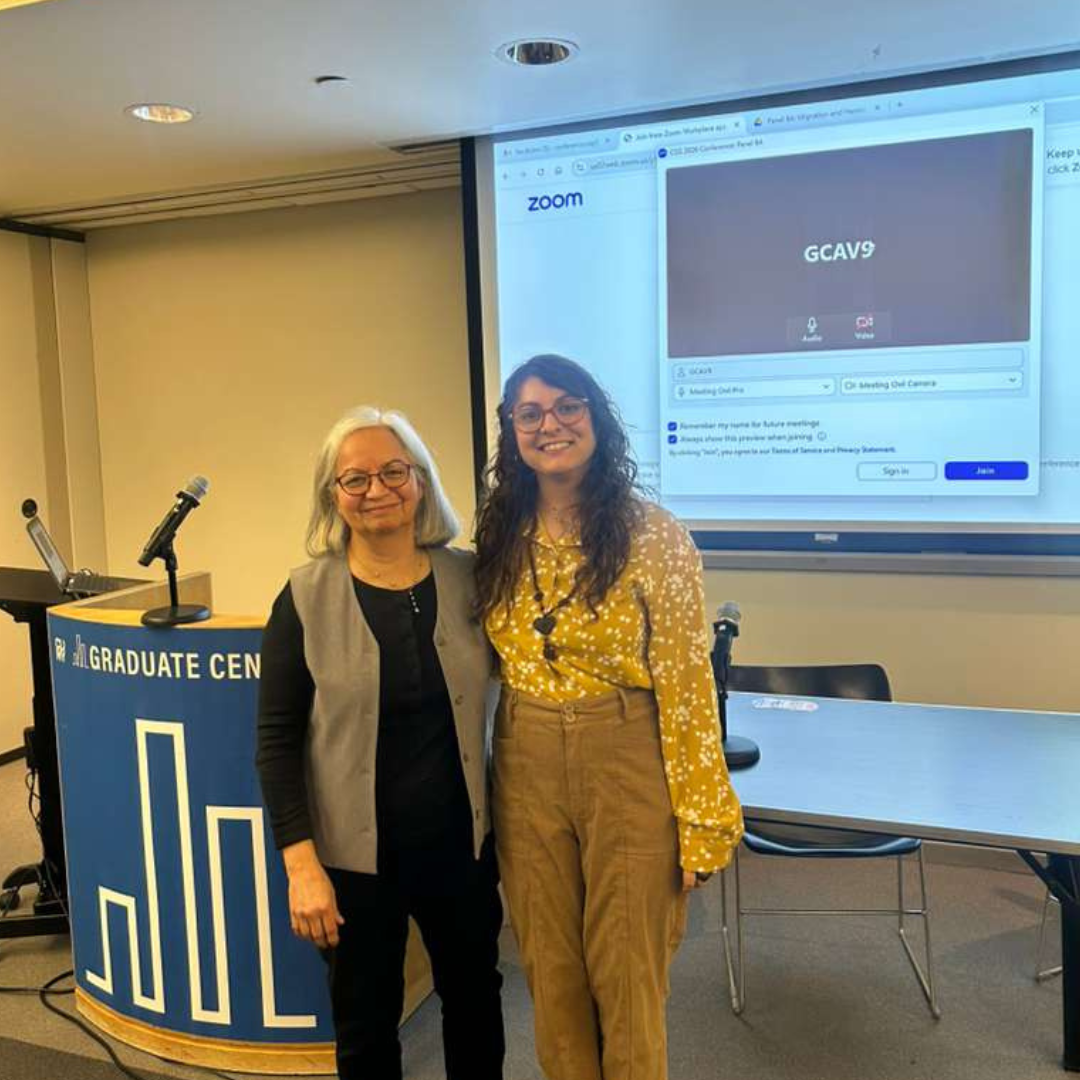
The conference “Critical and Creative Perspectives from and about Colombia, its Territories, and Diaspora” took place on February 27–28 at the CUNY Graduate Center in New York City. The bilingual event, held in Spanish and English, brought together scholars, researchers, and activists to explore diverse perspectives on Colombia, its territories, and its diaspora. It was organized by the Colombian Studies Group (CSG), an initiative that promotes academic collaboration, cultural exchange, public engagement, and connections with the Colombian diaspora.
Rutgers affiliates Sol Cristina Escobar and Gloria D'Alessio participated in the panel “Migration and Hemispheric Geopolitics.” Below is a summary of their presentations.
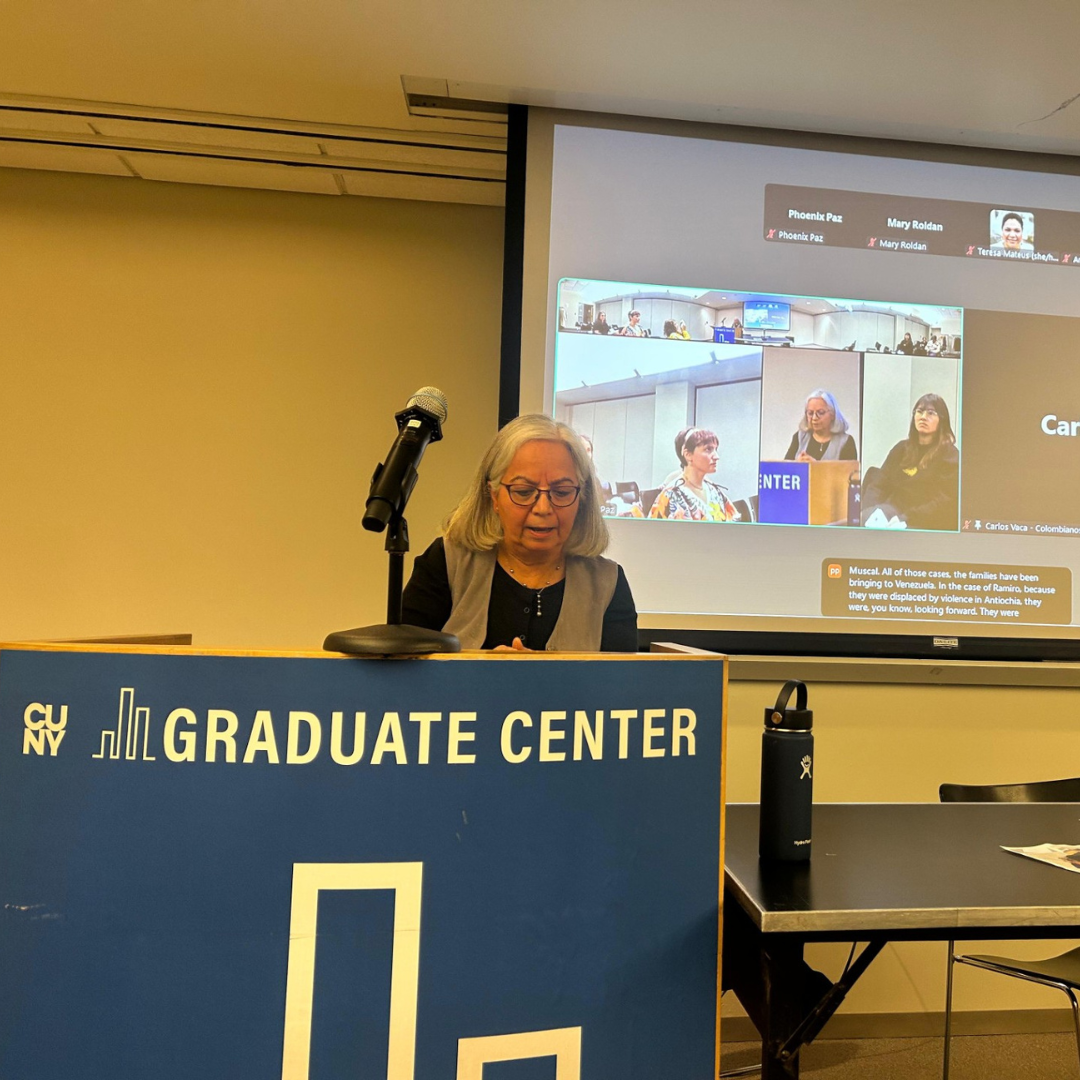
Sol Cristina Escobar, who teaches in the Global Studies Program at Rutgers University–Camden, presented her talk “Return.” Drawing on a chapter from her forthcoming book on Colombian migration, she examined the different ways return migration can be understood, including its direction, frequency, and whether it occurs voluntarily or through forced processes. Her presentation also addressed multiple dimensions of Colombian migration, ranging from retirement migration to deportation. Her broader research focuses on international migration, external citizenship, and political rights.
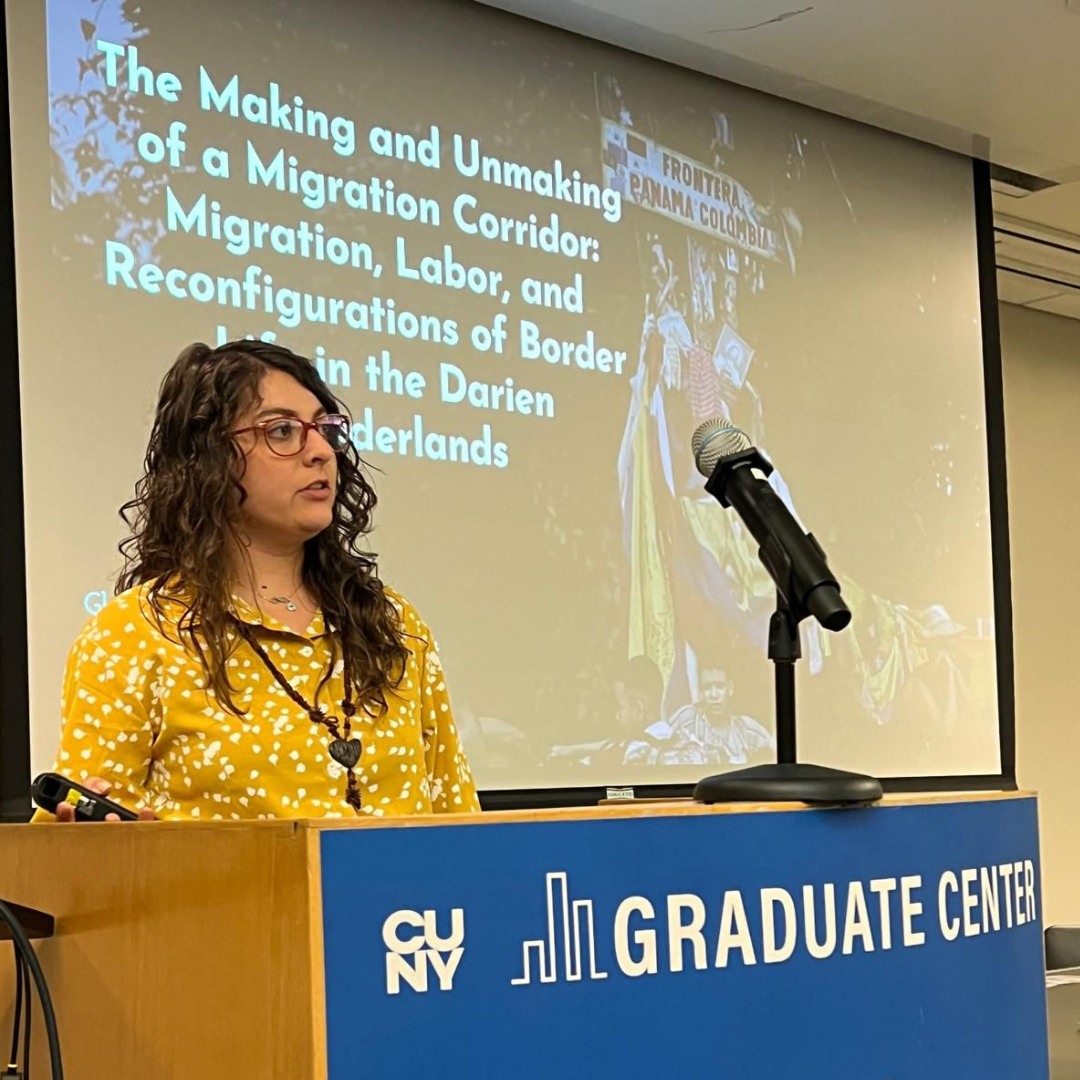
Also participating in the panel, Gloria, a second-year Ph.D. student in Cultural Anthropology, presented “The Making and Unmaking of a Migration Corridor: Migration, Labor, and Reconfigurations at the Darien Borderlands.” Her talk shared preliminary findings from her dissertation research, which examines migration dynamics, labor, and shifting territorial configurations in the Darién borderlands.
CLAS affiliate, Laura de Moya-Guerra, also participated in this conference. She presented the paper “From ‘Chinese Capitalists’ to ‘Leprous Beasts’: The Chinese and Immigration Laws in the Colombian Pacific, 1903-1931,” which is part of her dissertation “Chinese Immigrants and the Making of Modern Colombia, 1903-1980.”