

Several CLAS grad student affiliates participated in the NeMLA convention, contributing to panels that explored contemporary debates in Latin American literature, culture, and critical theory.
Roni Lakin, PhD student in Comparative Literature, presented “Las sonrisas tienen dientes: Consumo, producción y mujeres caníbales en Fruta podrida” in the panel “Awakening Monsters in Latin America: From Eco-horror to Tech Doom.” His presentation explored the use of both literal and metaphorical cannibalism in Lina Meruane’s Fruta Podrida. By highlighting moments of rebellious consumption, this analysis demonstrated how the figure of the cannibal allows Meruane to critique global patterns of consumption under neoliberal capitalism.
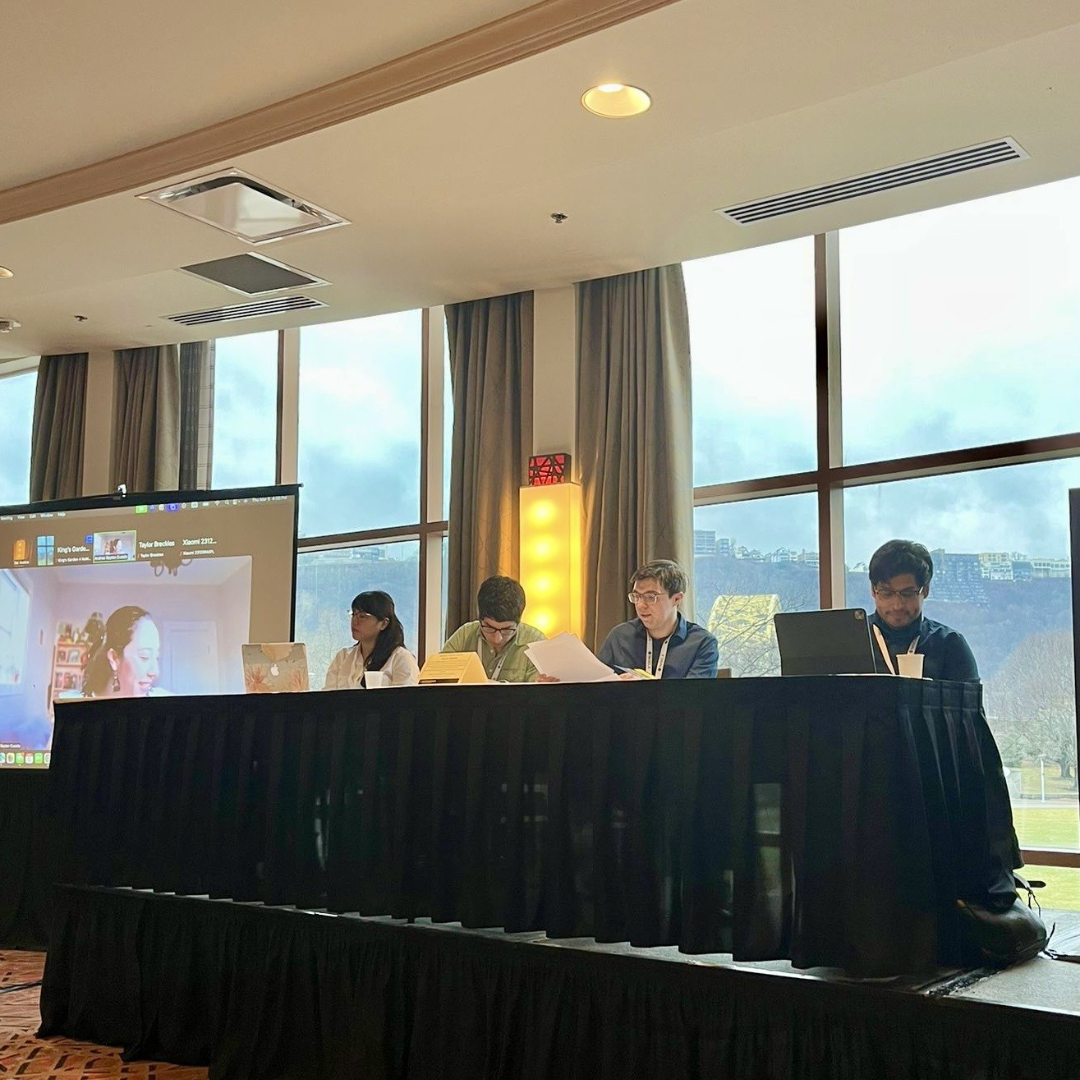
Ana Llurba, PhD candidate in Latin American, Iberian, and Luso-Afro-Brazilian Literatures and Cultures, presented her paper, “Un banquete ancestral: cosmopolítica y ecofeminismo en ‘La comunera Triguero cerró fuertemente los ojos’ de Mafe Moscoso,” as part of the panel “El vértigo de las nuevas mitologías: poshumanismos en el arte y la literatura latinoamericanas.” Her paper argues that Moscoso challenges Western narrative conventions and linear time notions, presenting an ancestral future grounded in ecofeminist survival practices, while exploring themes of food, loss, and grief within the context of the environmental crisis and the Anthropocene in Latin America.
Jennifer Vilchez, PhD candidate in Women’s, Gender, and Sexuality Studies, organized and chaired the panel “(Re)Generating Keywords for EcoLatinx Studies and Praxis,” which offered a creative feminist space to explore the ecological and intersectional commitments of Latinx studies and praxis that have unduly become secondary to its political and institutional uses. Jennifer also presented her paper, “The Orchid: A Metaphor for Colonialism and Over-tourism in Latinx Studies,” where she explored how in self-taught New Jersey-based Dominican-born artist Bony Ramirez’s exhibition Cattleya, he positions the Cattleya orchid as a way to understand both the history of colonialism and the toxic impact of tourism in the Caribbean, its people, and those in the diaspora. This paper expands on Ramirez’s articulation of the Cattleya orchid and its ability to simultaneously convey and veil the violence of tourism as the after effect of colonialism.
Congratulations to all of you!